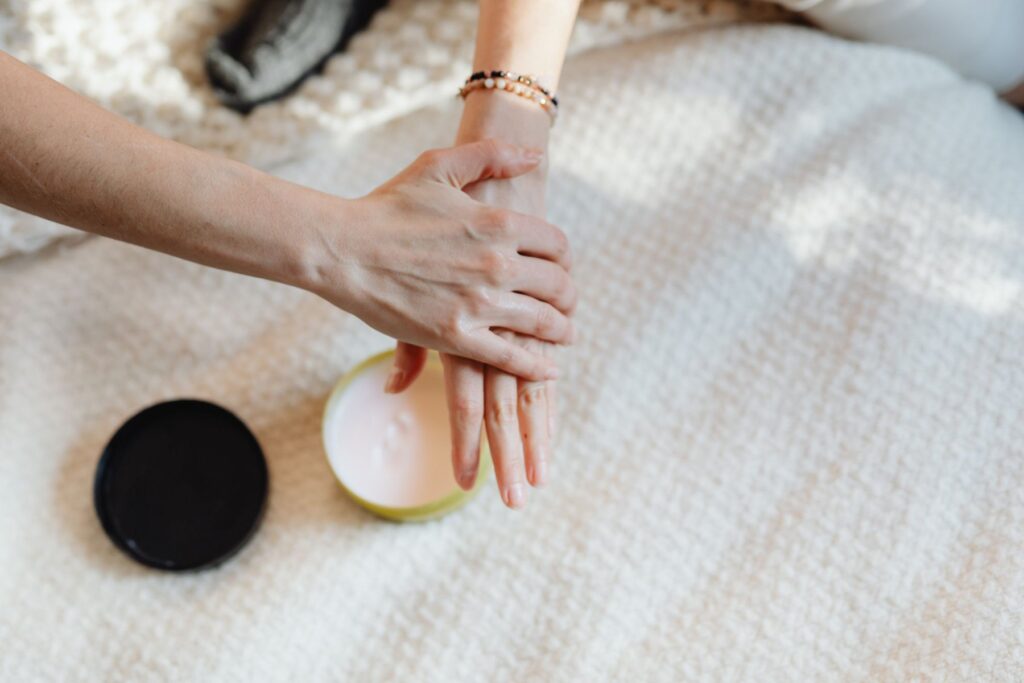
Hands take more winter damage than almost any other skin on the body. They are the part most often left bare in the cold and the part washed many times a day, and once the outer layer of skin runs low on oil and water, it stiffens and splits, usually first across the knuckles and at the fingertips.
The catch is that good hygiene makes it worse. Every wash strips away a little more of the oil that holds skin together, and hot water, scented soap and a quick pump of thin lotion all add to the problem instead of fixing it.
Dermatologists recommend a short list of changes, most of them cheap: cooler water, a heavier cream put on at the right moment, and a night routine that gives split fingertips a chance to close.
Why do hands crack in winter?
Washing is the biggest factor most people control. Susan Massick, MD, a dermatologist and associate professor at The Ohio State University Wexner Medical Center, explains that frequent washing removes sebum, the natural oil skin makes, while cold air, wind and low humidity pull out the moisture that remains. With that protective layer, called the skin barrier, weakened, water escapes faster and tiny cracks open up.
Hands also get wet and then dry again more often than any other part of the body. Walter J. Liszewski, MD, a dermatologist at Northwestern Medicine in Chicago, says that cycle makes dry skin worse. Ceramides and other fats work like glue between skin cells and keep water from escaping, and hot water strips them away.
Is it dry skin or hand eczema?
Hand eczema, also called hand dermatitis, is common: the National Eczema Association puts it at about 14.5% of people worldwide, and cold weather, low humidity and stress can all set it off.
The difference matters because the two respond differently. Dawn Davis, MD, a board-certified dermatologist at Mayo Clinic in Rochester, Minnesota, told the American Academy of Dermatology that ordinary dry hands usually get better with moisturizer, while eczema often does not. Signs that point to eczema include:
- Patches that look red, dark brown, purple or gray, depending on skin tone
- Scaling, itching or burning
- Small, itchy blisters
- Deep, painful cracks, or skin that bleeds or weeps
Common triggers listed in the same release include leaving hands damp after washing, cleaning detergents, solvents, latex and some metals in jewelry.
1. Wash in lukewarm water and leave your hands a little damp
The American Academy of Dermatology (AAD) recommends washing for at least 20 seconds in lukewarm water, then drying with a clean towel but stopping while the skin is still a little damp, or letting hands air dry. Put on cream or ointment straight away, working it into the fingertips and around the nails. Moisturizer traps the water still sitting on the skin, so timing matters as much as the product.
2. Keep a tube, not a pump, by every sink
The same AAD guidance favors hand cream from a tube or tub over a pump bottle. Put a tube beside the kitchen sink, the bathroom sink and the bed so there is never a reason to skip it. If one soap seems to leave hands tighter than another, the AAD suggests trying a few until you find a gentler one.
3. Use hand sanitizer when hands aren’t visibly dirty
It sounds backward, but alcohol rubs are often gentler than soap. A 2020 systematic review in the journal Contact Dermatitis, which pooled 20 studies, concluded that alcohol-based hand rubs irritate skin less than most antiseptic or plain detergent soaps, and that added glycerol, a moisturizing ingredient, helps skin hold more water. Most of the studies were done in healthy volunteers, and the authors note that alcohol tends to burn on skin that is already irritated and may need to be limited for people with a damaged skin barrier. Soap and water are still the choice when hands are visibly dirty.
4. Choose an ointment or cream over a lotion, and reapply
Moisturizers come in three textures. Ointments are oil-based, creams are a mix of oil and water, and lotions are mostly water, Dr. Davis explains in a Mayo Clinic Minute video. “If your skin is extremely raw, you may want to start with ointments,” she says, then switch to a fragrance-free cream or lotion as it heals. Because moisturizer only lasts a few hours, she recommends putting it on two or three times a day, at minimum. On cracked hands, that usually means after every wash.
5. Look for these ingredients on the label
Dr. Massick at Ohio State sorts the useful ingredients into three groups:
- Seal moisture in: petrolatum, mineral oil and dimethicone
- Hydrate: glycerin and hyaluronic acid
- Soften: shea butter, ceramides and natural oils
She also names colloidal oatmeal as worth looking for. For rough, thickened skin, creams with lactic acid may help: Barbara Gilchrest, MD, a senior lecturer on dermatology at Harvard Medical School, told Harvard Health Publishing that creams with alpha hydroxy acids such as lactic acid tend to hold moisture longer, and suggested starting with small amounts so they don’t sting.
6. Buy “fragrance-free,” not “unscented”
The two labels are not the same. Shilpi Khetarpal, MD, a dermatologist at Cleveland Clinic, says fragrance can irritate skin and pull moisture from the barrier, and that products marked “unscented” can still contain some fragrance. To avoid it completely, look for “fragrance-free.” That matters most if you have eczema or another condition that weakens the skin barrier.
7. Give your hands an overnight treatment
Night is when a heavy layer can stay on long enough to work. Natalie Matthews, MD, a board-certified dermatologist at Henry Ford Health in Michigan, suggests a thick hand cream during the day and a heavier, clear petroleum ointment at night, with thin cotton gloves over it if it feels greasy. Cotton gloves are sold in most drugstores and can be washed and reused.
8. Seal split fingertips and knuckles
Deep cracks, called fissures, need extra help to close. Mayo Clinic suggests sealing a crack with a liquid bandage, which forms a thin protective film, and moisturizing several times a day, ideally while the hands are still damp. At bedtime, put petroleum jelly or a thick ointment on the cracked tips and cover them with gauze and tape or cotton gloves. Mayo Clinic also points to hot dishwater as a common cause, which leads to the next tip.
9. Wear gloves outside and for wet chores
Dr. Matthews notes that hands are constantly exposed to the elements, and Henry Ford Health recommends gloves outdoors and for washing dishes and cleaning. For wet work, the National Eczema Association suggests cotton or vinyl gloves rather than latex, with thin cotton liners underneath if your hands sweat. A layer of cream before the gloves go on gets extra use out of the time.
10. Run a humidifier, and keep it clean
Indoor heating dries the air in every room. Mayo Clinic recommends keeping indoor humidity between 30% and 50%, checked with an inexpensive gauge called a hygrometer. Use distilled or demineralized water, empty and refill the tank every day, and clean the unit every three days with 3% hydrogen peroxide, unplugged, so it doesn’t grow mold or bacteria. A humidifier helps, but it does not replace hand cream.
11. Leave your cuticles alone
Dry winter cuticles are tempting to pick or trim. The cuticle works as a seal that keeps bacteria, fungus and debris out, and Dana Stern, MD, a dermatologist and nail specialist, told NPR that removing it can leave the nail open to infection. For tidier nails, she suggests using a washcloth to ease the cuticles back once a shower has softened the skin, then massaging in a skin-safe oil; olive oil from the pantry works.
How long does it take for cracked hands to heal, and when should you see a dermatologist?
Neither the AAD nor Mayo Clinic puts a set number of days on healing ordinary dry, cracked hands. For hand eczema, the National Eczema Association says a flare often lasts three to four weeks.
See a dermatologist if home care isn’t helping, or sooner if a crack shows signs of infection such as crusting, pus or increasing pain. According to the AAD, treating hand eczema early helps prevent infections, including cellulitis, a skin infection that can spread, and a dermatologist can prescribe treatments such as a topical steroid or a topical calcineurin inhibitor, a non-steroid anti-inflammatory cream.
If you change only one habit this winter, make it the minute after washing: lukewarm water, a light towel dry, and a thick, fragrance-free cream on still-damp skin. Add petroleum jelly and cotton gloves at night, and keep the tube where the water stops running.
This article is for general information and is not medical advice. Talk to your own doctor or dermatologist about any skin condition.