I have had RF microneedling twice now, and nobody warned me about one thing beforehand: for about nine days after a session, your face has a whole storyline of its own.
I photographed all of it. The bright red skin straight after, the scabby second day that nobody posts, and how my cheek looked weeks later.
This article covers what RF microneedling is, how much it hurts, what recovery looks like day by day, what it costs in the US and the FDA warning to read before you book. The photos are of my face. The facts come from dermatologists and the FDA, linked as we go. I am not a doctor and none of this is medical advice.
What is RF microneedling?
RF stands for radiofrequency. Regular microneedling uses very fine needles to make tiny punctures in your skin, and your skin makes fresh collagen as it repairs them. RF microneedling does the same thing and adds heat. The FDA describes radiofrequency as a type of electrical energy that creates heat in tissue, sent through the needles to a set depth under the skin.
Heat tightens skin. The warmth pushes your skin to make new collagen, which is why Cleveland Clinic lists RF microneedling for wrinkles, scars and skin that has lost some firmness.
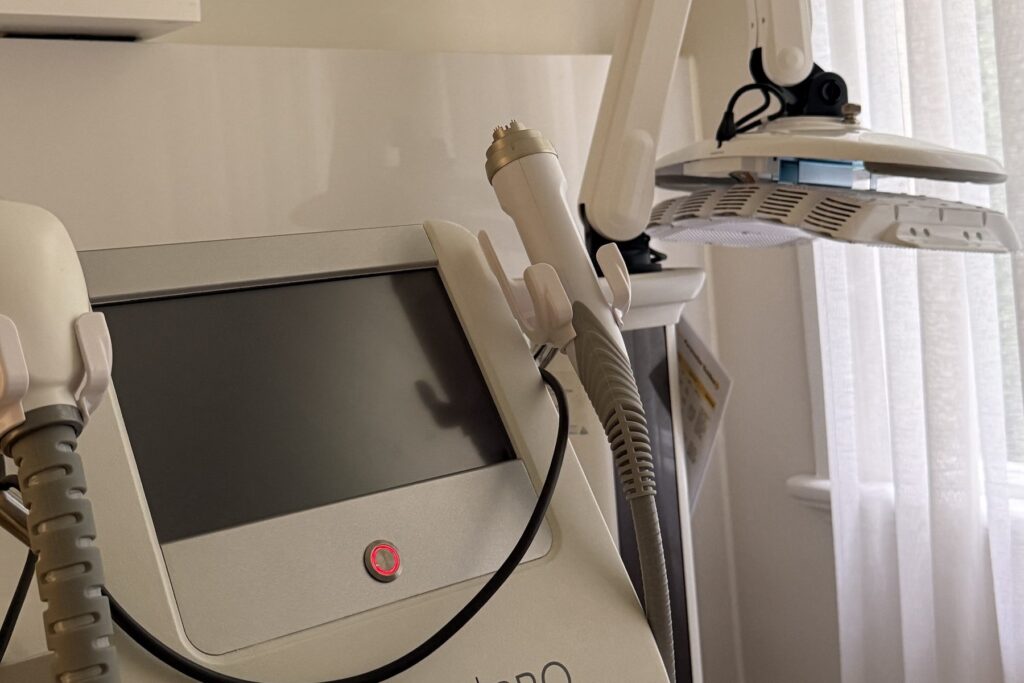
You will also see RF microneedling sold under machine names. Morpheus8, Potenza, Vivace and Genius are all RF microneedling machines. My treatments were done with an EndyMed Pro.
Does RF microneedling hurt?
Yes. Even with numbing cream. The best way I can describe RF microneedling is a hot stamp, pressed slowly across your whole face. I spent most of my first appointment thinking, if it hurts this much, it has got to be doing something.
Dermatologists do not pretend it is painless. Chapel Hill dermatologist Beth Goldstein, MD, told NewBeauty RF microneedling can mean more discomfort and more downtime than regular microneedling. The numbing cream can take up to 45 minutes to kick in, so allow about an hour for the whole appointment.
The pain did not put me off. I booked a second session.
Before and after: my skin straight after a session
On the left is my cheek before a session. On the right is the same cheek immediately after.
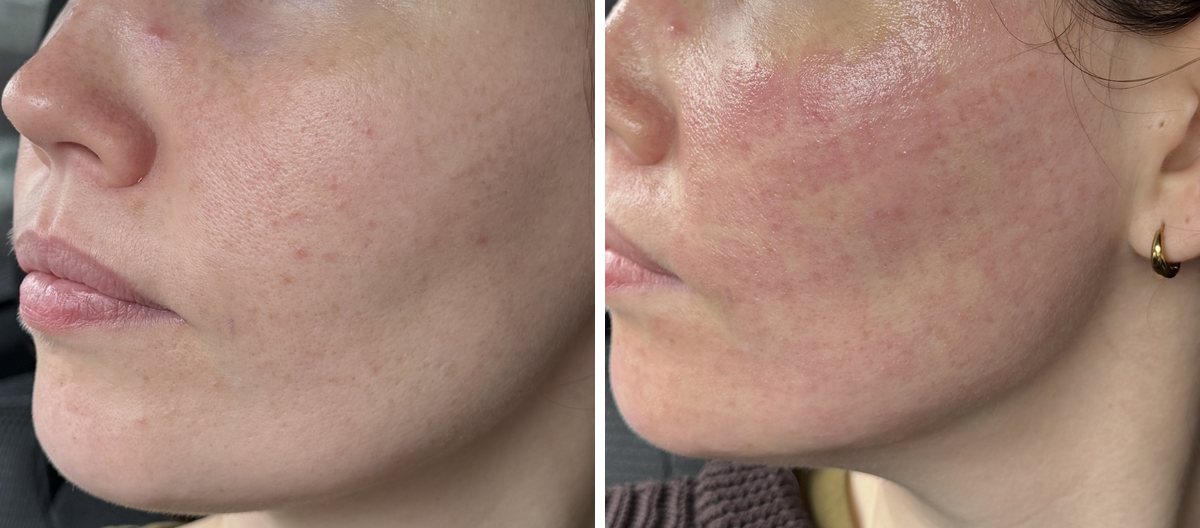
You can see the grid of stamp marks. I go very red in general, so your skin might not look this dramatic. The redness looks alarming and it fades fast. After a couple of hours my skin was nowhere near as red, and the redness was gone within the day. (I went about my business looking like this. No regrets.)
The grid is normal. New York dermatologist Rita Linkner, MD, told NewBeauty the pattern can last for up to 36 hours.
The first day: pink, puffy and oddly smooth
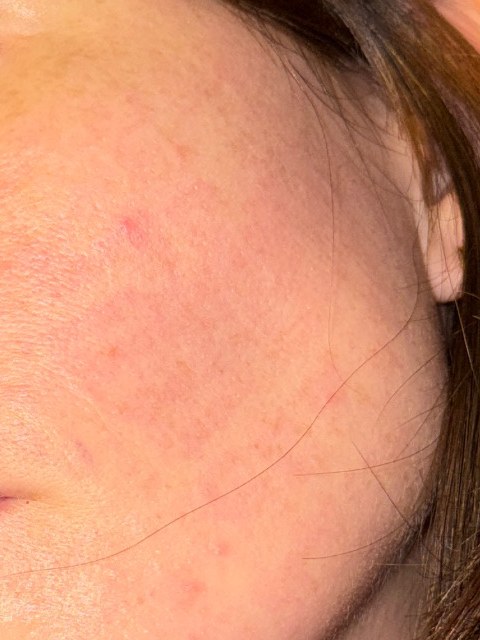
After my first session I expected to walk out looking far scarier than I did. My skin was pink and a bit swollen. My clinician finished with a red light treatment to calm my skin down, and I think the red light made all the difference.
About eight hours later I could still see some red stamp marks. My skin also felt weirdly smooth, although I am fairly sure the smoothness was just swelling.
Day two to day nine: the part nobody posts
Two days in, my cheeks were covered in tiny dark dots that looked like blackheads. The dots were scabs from the stamping. My skin felt bumpy, like chicken skin. The scabs did not hurt at all. I just needed every bit of willpower I had not to scratch or pick at them.
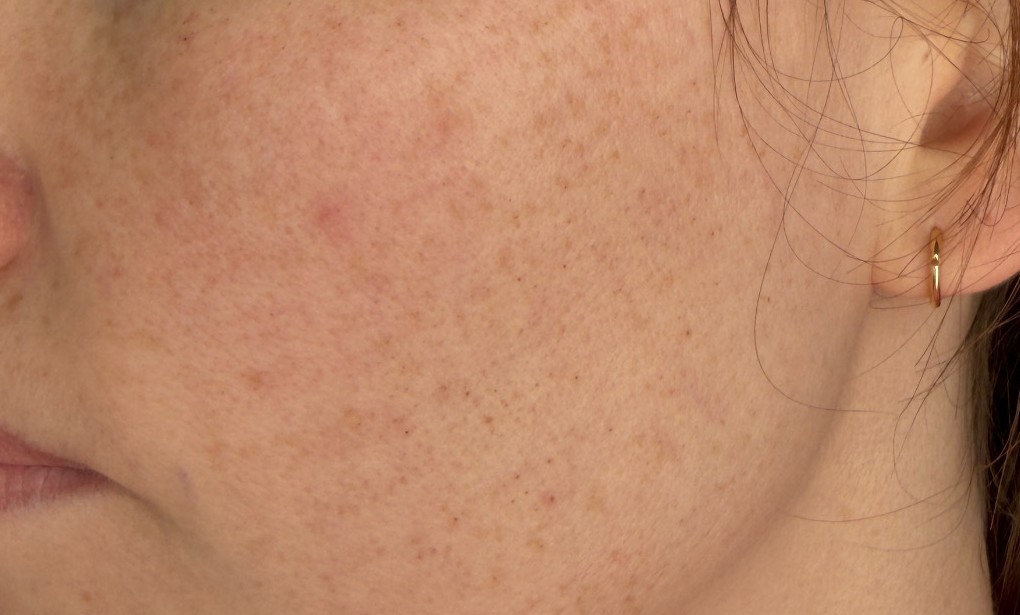
By day four the bumps and scabs on my cheeks were slowly starting to go. The scabs along my jawline took about ten days to come off, so maybe the needles went a little deeper there. By day nine I still had a few scabs, but my skin was almost fully healed.
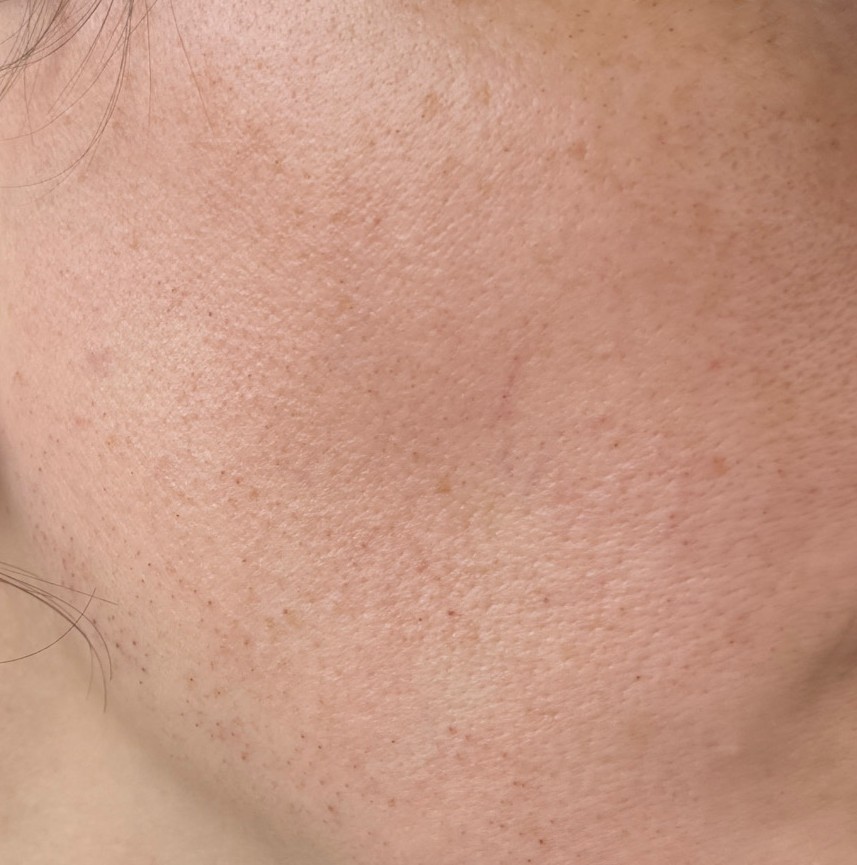
Nine to ten days of healing is slower than the tidy timelines on clinic websites, which tend to promise a day or two of redness. If you have a wedding or a big work event coming up, I would book RF microneedling at least two weeks before it.
Know the warning signs too. Dr. Linkner told NewBeauty she has seen allergic reactions and infections after RF microneedling. Redness that gets worse instead of better, or skin that turns hot and sore, means you should call your provider that day.
What to put on your skin after RF microneedling
Less than you think. Chicago dermatologist Jordan C. Carqueville, MD, told NewBeauty she recommends a hyaluronic acid serum or a plain occlusive like petrolatum for the first two to three days.
Miami dermatologist Anna Chacon, MD, told NewBeauty the big mistake is going straight back to strong products. She says to hold retinoids, acids and benzoyl peroxide for about a week, or until your skin barrier feels normal again.
Stay out of the sun as well. Dr. Carqueville advises avoiding direct sun for the first few days, then wearing a hat and sunscreen consistently for a month.
How many sessions until you see results?
More than one. My clinician told me to have a few treatments, about a month apart, before judging the results. Cleveland Clinic says two to four treatments are typical, and that the best results show three to six months after the first treatment, because collagen takes that long to build.
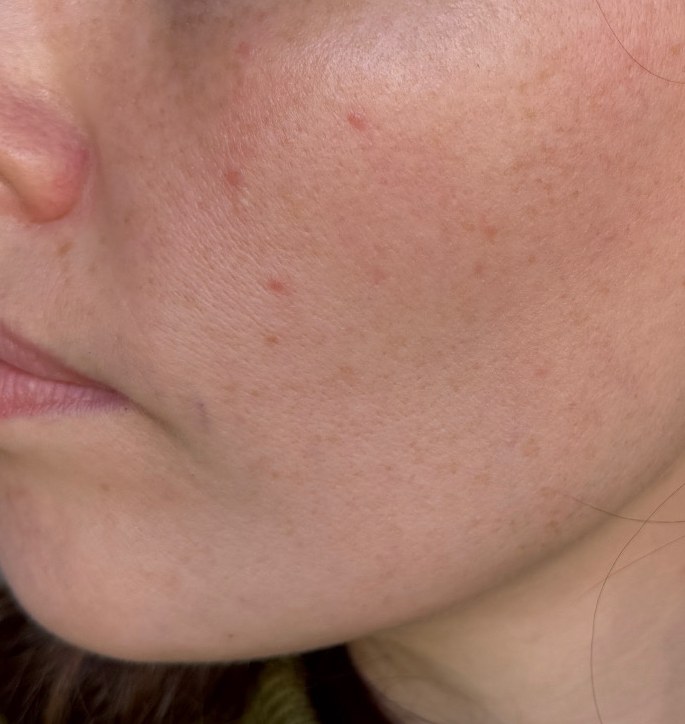
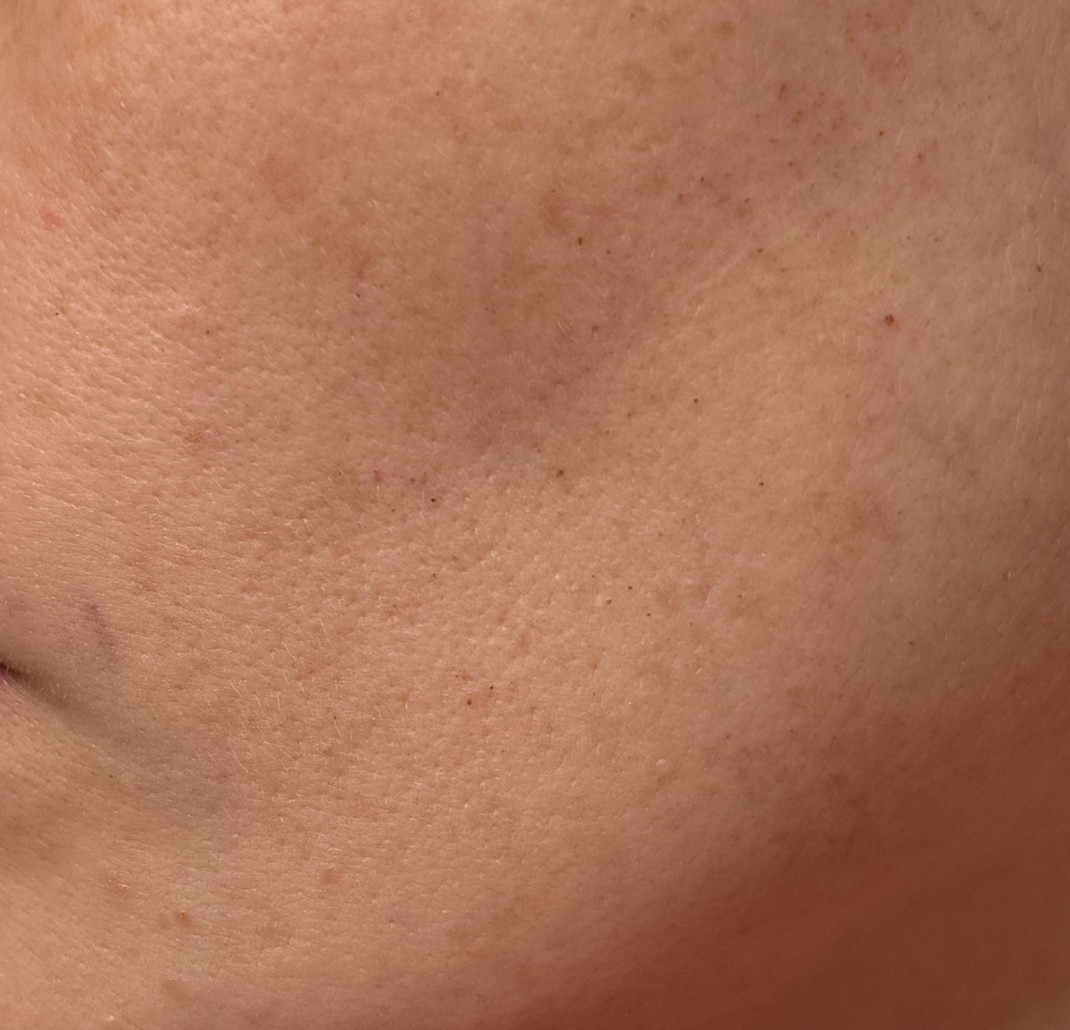
The photo above is my cheek seven weeks after my first session. I could see some improvement in my skin texture by then. Take my verdict with a grain of salt, though. I forgot to take a before photo ahead of my first session, so I was going on what I saw in the mirror. I did not make the same mistake the second time.
RF microneedling vs regular microneedling
I have had regular microneedling as well as RF microneedling. The only difference between the two is the heat: regular microneedling makes the tiny channels in your skin and stops there.
My feeling is that RF microneedling did more for my skin than regular microneedling. It is hard to be sure, and in my head the more painful procedure will obviously have better results, which could just be my messed-up view on life.
How much does RF microneedling cost?
RF microneedling costs more than regular microneedling. RealSelf members report paying $1,089 a session on average, with a range of $600 to $2,300, based on 111 reviews. RealSelf says most people need three to four sessions, and that the price changes with your city, the machine and who is holding it. Three sessions at the average price comes to about $3,270.
I paid roughly a third of my clinic’s list price, because I booked through ClassPass. ClassPass is known for gym classes, but it also sells beauty and spa appointments, and it is the best hack I know for saving money on treatments. What is listed depends on your city, so check ClassPass before you pay full price anywhere. If you want to try it, this is my ClassPass link for a free trial. The trial covers workouts, not beauty treatments, but you can look at what is listed for nothing. (My ClassPass link is an affiliate link, so I may earn a small commission if you sign up.)
Is RF microneedling safe? What the FDA says about fat loss
After my first treatment I fell down a Reddit hole of people worried about RF microneedling melting the fat in their face and leaving them gaunt. I did not lose any fat from my face, and I had no weird side effects. The worry is not made up, though.
The FDA put out a safety communication in October 2025 saying it had received reports of burns, scarring, fat loss, disfigurement and nerve damage after RF microneedling. The FDA did not say how often these problems happen. It did call RF microneedling “a medical procedure, not a cosmetic treatment.”
The FDA’s advice is short. Go to a licensed health care provider who is trained and experienced on the device. Ask which device the provider plans to use. Do not try RF microneedling at home. If something goes wrong, see a provider and report the problem to the FDA.
My own rule is the same. I would only have RF microneedling done by a clinician I trust.
My verdict: is RF microneedling worth it?
Yes, for me. After two sessions I can see some improvement in my skin texture, I had no weird side effects, and I am glad I did it.
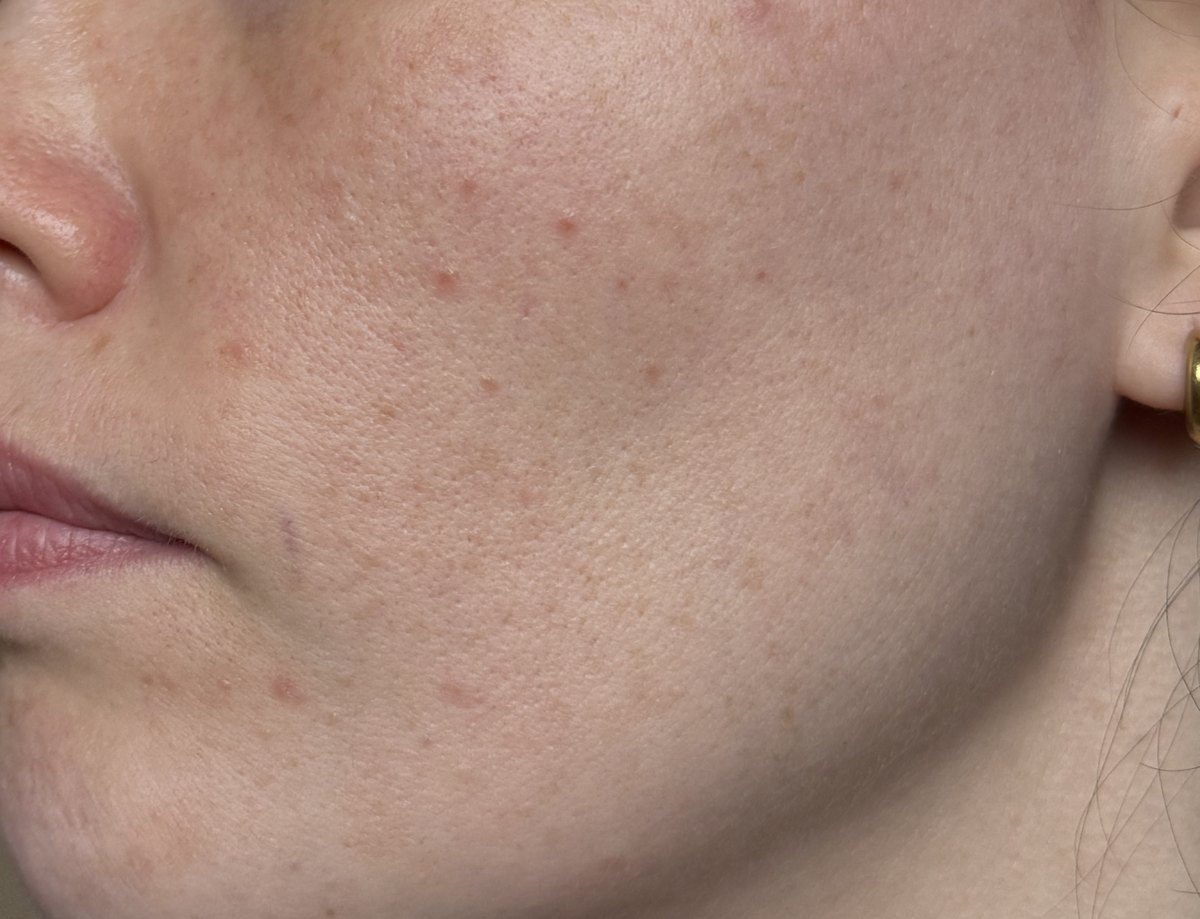
RF microneedling is not quick, painless or cheap. You are paying for several sessions, a sore hour in the chair and about nine days of scabs. If you can live with all three, and you have found a clinician you trust, I would do it. I have, twice.
How this article was put together: the photos and the experience are mine, from two RF microneedling sessions. The facts come from the FDA, Cleveland Clinic, RealSelf and dermatologists interviewed by NewBeauty, all linked above. US prices are as reported at the time of writing. This article is not medical advice. Talk to a board-certified dermatologist about your own skin.
All photos are the author’s own.