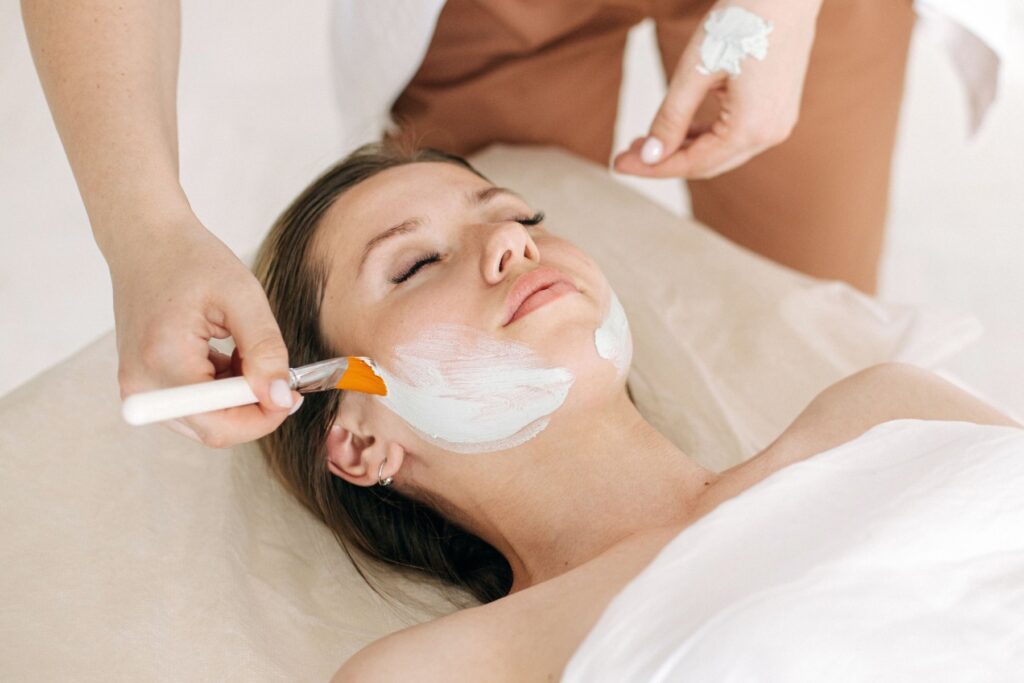
A chemical peel can mean a pink face for a weekend or two weeks indoors, and the difference is how deep the acid goes. The same treatment name covers a gentle glycolic peel done on a lunch break and a phenol peel that needs heart monitoring.
Even a light peel usually gets worse before it gets better: tight and pink for a day or two, then flaking for most of a week. Medium peels go further, darkening and crusting before the old skin comes away.
Knowing the depth before the appointment answers most of the practical questions, from how many days to keep clear to when makeup can go back on. Get it right and a light peel fits neatly into a quiet week, with the flaking finished before the next big plan.
How deep a chemical peel goes, and why it matters
In a chemical peel, an acid solution is painted on, the top layers of skin loosen and shed, and newer, smoother skin comes through underneath. Mayo Clinic sorts peels by how far down they reach: a light peel removes the epidermis (the outermost layer of skin), a medium peel also takes part of the upper dermis (the layer below it), and a deep peel goes further still.
The acid and its strength set the depth. A review in the National Library of Medicine’s StatPearls lists the usual recipes:
- Light: 30% to 50% glycolic acid, Jessner solution (a mix of resorcinol, salicylic and lactic acids) or 20% to 30% trichloroacetic acid (TCA).
- Medium: 35% TCA paired with a second agent, either Jessner solution or 70% glycolic acid.
- Deep: TCA above 50%, or phenol mixed with croton oil. Phenol can affect the heart, so these peels are done with cardiac monitoring.
Most peels at a dermatologist’s office or med spa are light. If the provider hasn’t said which kind you’re booked for, ask the acid and the percentage, because every timeline below depends on it.
Chemical peel recovery at a glance
The American Academy of Dermatology (AAD) gives these healing times and makeup timings:
| Peel depth | Healing time | Makeup back on | Time off |
|---|---|---|---|
| Light | 1 to 7 days | Right away or the next day | Rarely needed |
| Medium | 7 to 14 days | After 5 to 7 days | About a week |
| Deep | 14 to 21 days | Not before 14 days | 2 to 3 weeks at home |
The time-off column comes from DermNet, the dermatology reference site, which notes that most people carry on as normal after a superficial peel and take about a week away from work after a medium TCA peel.
Light peel recovery, day by day
Day 0. The solution stings or burns while it’s on the skin. The American Society for Dermatologic Surgery puts that at about 5 to 10 minutes, eased by cold compresses.
Days 1 and 2. Redness and tightness. DermNet says redness after a superficial peel usually settles within about 48 hours.
Days 3 to 7. Scaling and flaking. Cleveland Clinic describes light-peel redness giving way to scaling over three to seven days. Blaize Nicole, who writes The Skin Nutritionist newsletter, described her own TCA-based peel feeling tight for two days, peeling from day three, mostly around her mouth and nose, and wrapping up after about ten.
After a week. Most light peels are done shedding. Cleveland Clinic dermatologist Shilpi Khetarpal, MD, said on the clinic’s Health Essentials podcast to expect about three to seven days of redness and flaking, and not to book a peel right before a big event.
Medium peel recovery, week by week
The first 48 hours. Swelling can stay the same or get worse for the first two days, according to Cleveland Clinic, and blisters may form and break. StatPearls suggests an ice pack, or frozen peas in a bag, held on the skin for 10 minutes every hour for the first day or two. Mayo Clinic adds that over-the-counter ibuprofen or naproxen can help with discomfort.
Days 3 to 14. The ASDS says blisters crust, turn brown and peel off within seven to 14 days of a medium peel, with new pink skin showing underneath. The AAD’s aftercare for medium peels is daily soaks followed by ointment, an antiviral medicine for 10 to 14 days, and no sun at all until the skin has healed.
Weeks 2 to 8 and beyond. The new skin can stay pink for weeks. The Aesthetic Society, a professional group of plastic surgeons, says skin may still be pink for the first few months. Makeup can cover it from about day five to seven.
Deep peel recovery
A deep peel is closer to surgery than a facial. The AAD describes two to three weeks of recovery at home, with four to six soaks a day and ointment for the first 14 days, then a thick moisturizer, an antiviral, and strict sun avoidance for three to six months. Mayo Clinic notes that redness after a deep peel can last for months, and treated skin can end up darker or lighter than before, or lose the ability to tan.
What to put on your skin while it heals
Keep it plain. Pat the face clean with a gentle cleanser instead of rubbing, as StatPearls advises, and keep it moisturized with an unscented cream several times a day. Dr. Khetarpal’s advice on the Cleveland Clinic podcast was a very basic moisturizer, or simply petroleum jelly, plus sunscreen from the day after the peel. She also said to pause retinol and acne treatments until the skin has healed.
Sunscreen matters more than any other product. Manuela Conde, a nurse practitioner who writes the Skin Notes newsletter, recommends reapplying often and staying out of direct sun for two weeks or more, since sun on healing skin raises the risk of dark patches, especially for deeper skin tones.
What not to do after a chemical peel
- Don’t pick or pull flakes. The AAD warns that picking at crusts raises the risk of infection and scarring. Blaize Nicole’s fix for a hanging flake was to snip it with small scissors instead of tearing it.
- Skip workouts, saunas and hot showers for 48 hours. Dr. Deborah Longwill, a board-certified dermatologist in Miami, told NewBeauty to avoid exercise and high heat for the first two days.
- No tanning beds, which the AAD lists alongside the sun as something to avoid while healing.
- Don’t let the skin dry out and crack. The AAD notes that dry, cracked skin can scar, which is why ointment and moisturizer go on so often.
When can you wear makeup after a chemical peel?
After a light peel, the AAD says makeup can usually go on right away or the next day. After a medium peel, wait five to seven days. After a deep peel, wait at least 14 days. The AAD warns that makeup worn before the skin heals raises the risk of complications.
When can you go back to retinol and exfoliating acids?
Only once the skin has stopped peeling and no longer feels raw. None of the medical sources gives a single date, because it depends on the depth and on how your skin heals. For any peel, the dermatologist who did the treatment should say when, and it’s worth asking at the appointment rather than guessing.
What if your skin doesn’t visibly peel?
It doesn’t mean the peel failed. On the Derm-it Trotter! podcast, board-certified dermatologist Shannon C. Trotter, DO, and her guest, dermatologist Jennifer Linder, MD, described today’s lighter peels as gentle, with little visible peeling and no downtime. Cleveland Clinic notes that light peels are usually done as a series, so results build over several sessions.
Warning signs to call your dermatologist about
The AAD says to call your dermatologist if the skin burns, itches or swells. Other reasons to call:
- Pain that is extreme or long-lasting, which The Aesthetic Society says is a reason to call.
- Yellow crusting, pus, spreading redness or fever, which can point to infection. DermNet lists bacteria, yeast and the cold sore virus as the usual causes.
- A cold sore flare. Cleveland Clinic notes that peels can reactivate cold sores in anyone with a history of them, so mention it before the appointment and ask about preventive medicine.
- Dark or light patches that are still there after the skin has healed.
Peels on deeper skin tones and melasma
Pigment changes are the risk to plan around. Mayo Clinic says darker or lighter patches are more common in brown and Black skin and can be permanent, and the AAD advises choosing a dermatologist experienced in treating skin of color. Cleveland Clinic adds that taking the pill, being pregnant, or having relatives with brown patches on the face also raises the odds of pigment changes, which matters for anyone treating melasma (brown patches often linked to hormones).
How many peels you need, and what they cost
Light peels work as a series. Cleveland Clinic says three to five treatments, two to five weeks apart, is typical. Medium peels can be repeated every six to 12 months, and a deep peel is a one-time treatment.
Prices vary by city and provider. The American Society of Plastic Surgeons last reported a peel-only average fee of $519 in its 2020 statistics, a figure that leaves out anesthesia, facility fees and prescriptions. Expect a light peel to cost less than that and a medium or deep peel more, and ask whether the quote includes aftercare products and follow-up visits.
Who should skip a peel, and how to prepare
Mayo Clinic advises caution for anyone who has taken isotretinoin (Accutane) in the past six months, has had keloid scars or has relatives who have, is pregnant, or gets frequent or severe cold sores. Sunburned or broken skin should heal first.
In the week before, Mayo Clinic suggests no scrubs, masks, hair removal creams, hair dye or perms, and no shaving the area the day before. Advice on retinoids differs: some dermatologists stop them a week or two ahead and others use tretinoin to prepare the skin, so follow your own dermatologist’s instructions.
A light peel asks for a quiet week and very little else beyond moisturizer and sunscreen. Medium and deep peels need time off and close follow-up, so book them with a board-certified dermatologist and a clear calendar. For a closer look at healing after a different in-clinic treatment, see our photo diary of RF microneedling recovery, day by day.
This article is for general information and is not medical advice. Talk to your own dermatologist before booking a peel.